oem imaging

What Is A Meter Spot Key?

What Is A Meter Spot Key?

A meter, sometimes called an electrical meter, or even a power meter, is a device used to measure the amount of electricity which flows through a wire or cable from one appliance to another. Electrical meters are usually mounted on the utility service panel of a house. They are called “dipoles” because they usually have three parts: the body of the meter, the spring-loaded portion that controls the meter spring, and the arm of the meter, which connects to the main electric supply. The meter’s name comes from the French term “meter de gauche” which means “a meter of gauze.” A small hole is cut in the meter’s arm, through which the meter control’s needle is inserted. The meter’s body is usually made of either plastic or metal.

What is a meter spot (also known as an electric point)? This is a measurement of how much electricity flows through the meter’s arm. If the arm is fully extended and reaches its maximum value, this is called a power electric service request (SPED). The term “demand” is used here because you only request power when you need it, so if you don’t use your power electric service request, there will never be a measurable amount of electricity. Some electric power companies actually make their own measurements, but they are not adhered to uniformly throughout the United States.

You can also add information to your request. For example, you can indicate whether or not you are experiencing natural gas outages. In addition, you can indicate the date and time of day (or night) when the outage occurred, whether it was for one minute or one hour. You can also indicate the city or county in which you live.

What is a meter key? A meter key is what identifies you when you are performing a customer service call. Most customer service centers have a standard key that is unique to your local power company. Any time you call to make a power outage, your call is routed to a representative who uses your meter key.

What Is A Meter Spot?

How is a meter key entered into your phone? Your meter key (also called an address code by some companies) appears on your phone screen as a numerical value. You can enter this key any time when you call to make an electricity request. However, if you forget your meter key, your call will be routed to another customer.

Why does a call go to another employee if you forgot my meter key? Sometimes the incorrect key may have been typed in when you enter it on the phone. Other times, the telephone number or the customer’s name may have been typed in incorrectly. In these cases, the correct meter key must be entered onto the telephone so that the customer can be properly connected to the appropriate representative.

Do I have to keep the key with me at all times? In many cases, a meter key must be kept with the person who initially performed the service call. When a service call comes from an outside source, such as a utility company, the customer will not be able to see the meter and it will not be practical to have the key with the caller. This will prevent a mix-up in meters (i.e. a different meter spot for the same power source).

Why should I keep my what is a meter spot key? The main reason to keep a what is a meter spot key is to ensure continuity in services. If there is a power outage, you won’t be able to perform all of your normal maintenance routines and will need an accurate read of the current power level to make sure you can get the power restored quickly.

What is Non-OEM Battery?

What is Non-OEM Battery?

With the ongoing evolution of technology, what is non-oem and what are OEM? Well, both are interchangeable depending on how they use their power. Non-OEM, also known as generic, is the original equipment manufacturer’s (OEM) replacement for a particular product. On the other hand, OEM, or original equipment manufacturer’s replacement is a product which uses a non-OEM made component.

As we all know, in the automotive world, OEM is more preferred than non-OEM. The reason behind it is that OEMs produce quality driven products. They make products which perfectly fit into the standards set by Department of Transportation (DOT) and Federal Motor Vehicle Safety Administration (FMVSA). OEMs also provide authorized retailers with a full guarantee against manufacturing defects in products which they have already manufactured. And lastly, as per some studies, OEMs also spend more time on quality control testing of their products and provide constant support to assist retailers to carry out safe and proper financing programs.

Now, let’s have a closer look at what is non-OEM and what are OEMs. Non-OEM is a generic term used to describe any electrical device that is not manufactured under strict guidelines set forth by the original equipment manufacturer. Products which fall under this category includes, but are not limited to, bulbs, light bulbs, cigarette lighter, flashlights, radios, televisions, wall or ceiling mounted units, navigation systems, vehicle engines, marine engines and many others. Additionally, products that use non-OEM components may have improper wiring and connection where one would require full-featured and certified components. Non-OEM devices often require additional and expensive certifications from authorized dealers.

On the contrary, OEMs on the other hand are the original equipment manufacturer and they use only approved materials and devices for their product. This is because they have a license from the original equipment manufacturer (OEM) to do so. The difference between OEM and non-OEM is that an OEM can patent its own design; whereas a non-OEM product must comply with all applicable standards irrespective of its design. For example, a low-priced OEM fog lights would cost a lot less than its competitor’s OEM fog lights despite the latter having superior technology. As such, an OEM fog light must splice with other OEM fog lights or else it wouldn’t be able to meet the legal requirements.

What Is Non-Oem?

There are a few points to note about OEM and non-OEM lighting products. For instance, while an OEM might have special designed low beams or headlights that match the specifications of an OEM, it would not have the same standard on their parking lights. If an OEM does not allow custom parking lights to be made, then it follows that there is no standard on low beams in an OEM product. However, even if there isn’t a standard for the parking lights of a certain brand, there may be different types of plugs that have the same specification.

In addition, it is not always the case that what is non-OEM is identical to the ones manufactured by the original equipment manufacturer. If the low beams or headlights are OEM quality but non-OEM, it could mean that the parts used in their manufacture are of a much higher quality than what you would get when purchasing a non-OEM light. One important thing to note is that the non-OEM head light sockets often have very small holes for installing the light screws. This means that you need to make sure that your mounting bracket or OEM head light socket fits into these holes snugly.

When looking for what is non-OEM, you must also keep in mind that it might have a defective product code. This means that the device is of a different variety than what is OEM, which means that it might be counterfeit and thus it must be returned to the seller. For this reason, you must always ensure that you are dealing with a legitimate company before making any purchase. It is important to find out what kind of warranty they have. Since what is non-OEM may be of a much lower quality than what is OEM, the warranty would only cover the defects noted on the product itself.

If you wish to buy an aftermarket non-OEM battery, it is best to find out whether the company has a good reputation or not. Many of these “counterfeit” or re-badged products have poor reviews and few positive feedbacks. You can check out the online reviews of the company’s products to make sure that what you will be getting is of good quality. In most cases, the company will have a contact phone number where you can speak to the sales department to enquire about their product. You can also try bargaining with them to convince them to offer you a discount on their product, but in reality, buying from a reputable dealer is more beneficial in the end.

How Does a Spot Light Meter Work?

How Does a Spot Light Meter Work?

You may have heard about a spot light meter. This is a device which measures the amount of light that is emitted by a light source. These types of meters are commonly used on security and surveillance equipment. You may find different types of these devices for commercial, residential and industrial use. So, if you plan to purchase one, you should learn how it works.

How does a spot light meter work? Basically, this device has an integrated circuit, or LED, which is able to read the amount of light that is emitted by the input light. When the light hits the meter reader, it will register the amount of light that is reflected or emitted.

Basically, these devices are able to determine the direction of the light that is emitted. They also measure the distance between two points so that they can display a range of information. You may also use these meters for security purposes so that you will be able to determine whether someone is outside your house or inside your home. Aside from being able to read the intensity level of light, a meter reader can also indicate the color of the light as well as the type of spectrum.

There are basically three types of meters that are available. One type is digital. This is usually found in most household devices such as lights, security cameras, and traffic lights. The other type is analog. This is usually found in security devices such as security cameras, lights, and motion detectors. Finally, there is mechanical reading which is normally found in large machines such as cranes or bulldozers.

How Does A Spot Light Meter Work?

To answer the question how does a spot light meter work, a meter reader basically utilizes the principle of electricity and magnetism. You may have seen this principle on magnets that help you read where an iron particle is located. When you apply voltage or magnetism to a particular area, an electrical current will be produced and this will determine the intensity of the light. To read the results, the meter reader needs to apply a steady pressure to the meter’s arm so that the light will pass through the meter’s reading window.

To measure the amount of light that is emitted by a certain object, the meter reader uses a pair of electrodes. These electrodes are connected to a small piece of metal called the measuring cable. Through a series of wires, the wire readers are able to connect to a larger area called the measuring probe. Through the reading mechanism, the meter reader is able to determine the exact amount of light that is emitted by a certain item. In order to read the meter properly, you need to ensure that both of the black and white wires are connected to a single probe.

A normal light meter only displays colors for objects at a distance. You cannot expect it to display an image since it can only display light that is already emitted by the object itself. With a spot light meter, the meter reader can now read images because it can actually measure the depth of an object and then produces an image as a result.

The question of how does a spot light meter work is still a mystery to many people. However, once you get your own meter, you can use it for different purposes such as security and search. This meter will also help you determine where an intruder is so that you can secure your home or office more effectively. If you are planning to buy one, there are a lot of stores that carry different types of spot lights and you can try shopping around until you find one that best suits your needs.

What Three Things Does the Light Meter Use For Correct Exposure

What Three Things Does the Light Meter Use For Correct Exposure

What three things does the light meter use for correct exposure? Well there are actually only three things that you have to know about when it comes to meter exposure and getting the right exposure. I am going to talk about those three things here. The light meter uses those three things to tell you how much light your camera is exposing you for.

What three things does the light meter use for correct exposure? Those are F-number, flash resistance, and sensor Technology. The F-number tells you the minimum amount of light that the sensor can detect. If the sensor can detect more light, the camera will be over exposed. That is how the light meter works.

This sensor is what the camera looks at to see if it can take a picture. If the light is too dark, the camera stops the photograph and reverts to the flash. If the flash is not powerful enough, it will not take a picture. The flash resistance is what stops the camera from taking a picture too soon after the camera stops the shutter.

This is the last part of the light meter. This tells you what aperture you want the camera to use. The aperture affects the depth of field. The deeper the object, the wider the aperture. It also determines the depth of the whole scene.

Those are the three things that the light meter uses for taking the correct exposure. That is all there is to it. You just need to understand how to read the meter and use it correctly. There is no other way to do this.

If you want to learn how to use the meter correctly, then there is a digital photography course that will show you how to do this properly. If you already have a digital camera and you are just starting out, then there are other ways to learn how to use the meter correctly. There is even an eBook online that can teach you how to use the meter with just a few clicks of your mouse.

What Three Things Does The Light Meter Use For Correct Exposure?

The light meter stands for the meter and flash meter. The meter uses light as the source of measurement. The flash meter uses this light meter to measure the amount of light that is flash. The meter stands for the one who measures and controls the light and the flash. These are three things that all digital cameras use to measure their exposure.

This is why the question “what three things does the light meter use for correct exposure?” can only be answered by you. Only you know how much light you should expose your pictures to. You have to know how the camera works. It is a great question and now you have the answer.

The three things that all digital cameras use are the metering mechanism, the display and the circuitry. Each of these has it’s own role and they perform their respective functions in different ways. You can see this when you compare a digital camera with a film camera. When you look at the display on a digital camera, you can see the meters and the picture scale. All these items come together to tell you how much light your picture is worth to the photographer. This is what we call exposure.

Here’s the big secret. The metering mechanism is there to take your exposure readings and automatically adjust the shutter speed to expose the photograph for you evenly. That is what the light meter is for. Once you hand the digital camera to someone who really knows how to read it, the light meter knows what the meter is reading and adjusts the shutter speed accordingly. This is what the digital camera was designed for. So as to take your best photographs, you must learn how to use the metering system properly.

Let me give you a real world example. If you are taking a photograph of a person in a dimly lit room, then the light meter will have a problem. It will be giving you an incorrect value for light. This will make your pictures come out dark or too light. This is why you need to learn how to use the digital camera meter correctly in order for you to get the most accurate readings.

If you are asking “what three things does the light meter use for correct exposure”, you will also need to learn how to use the digital camera controls correctly. These include the exposure compensation, the manual focus lock and the auto focus lock. These controls are really very simple to use and should be taught to you by your instructor at the photography school. The exposure compensation will help to compensate for any changes in light levels as well as make sure that the camera operator has the correct shutter speed necessary for the image shot. And finally, learning how to use the digital controls properly will help you to keep from having all the confusion going on while taking the images.

What’s the Best Focal Length For Product Photography?

What’s the Best Focal Length For Product Photography?

When it comes to lens choices and focal lengths for product photography, many people often find themselves lost in the ocean of information that is available to them. The focal length of a lens is actually one of the first choices you’ll have to make when choosing a camera, and many times photographers don’t know the answer to this important question. The optical focal length refers to the distance between the center of the lens and the focal point of the image. If you want a camera with the ability to focus on the object without having to shift the camera itself then you’ll need to find a lens that has a longer optical focal length.

For years digital cameras and even camcorders have been offered by the manufacturer with different focal lengths, some much longer than others. Most of the time the shortest focal length is the shortest amount of time that you can take a photo without having to turn your camera around. This can be a problem because if you’re using the shorter focal length, while you might be able to get more subject, you might also have to move your camera farther away from your subject which makes it difficult to compose the photo once it’s taken. Choosing the best focal length for product photography means focusing less on the distance between the lens and the focal point, and more on the width.

The optical zoom on a camera is actually only necessary when you’re using a wide angle lens. If you’re using a lens with a short optical zoom then the camera will be able to get an image with a greater amount of dimension because it can cover a larger area without having to turn your arm or click the shutter release button too quickly. So although the optical zoom is a handy feature to have, it’s not a requirement.

So how should you approach what’s the best focal length for product photography? You need to make sure the distance between your subject and the background is consistent. If it’s out of sync, the entire frame of your shot won’t be in focus no matter how much space is involved. If you need to change the distance of a foreground subject to fit into a wider space, then you’ll need to use a wide lens.

What’S The Best Focal Length For Product Photography

The rule-of-thumb is to avoid the focal length being too long or too short. Of course this also depends on the subject that you’re using. For example, a long distant tree with a foreground character may require a longer lens so it’s in focus. A bright flash in the center of the frame will require a smaller lens to keep the image in focus. And so forth. Don’t let your focal length be a problem because it will affect everything else.

Remember that it’s not just the focal length that matters but also the distance between the two objects in focus. Distances can either be wide or narrow. When you’re choosing the focal length, always remember that a wider focal length will make the picture look bigger and a narrower focal length will make the picture appear more natural. So don’t make the mistake of thinking that the shorter the focal length, the better it is.

Of course, there’s more to it than what’s the best focal length for product photography. You need to remember that the subject of your shots needs to be in focus. And of course you need to be comfortable shooting your subject.

A lot goes into product photos, but those few basic tips should help you get started. Keep practicing. See some examples of other work by other artists. If you find that you are struggling, have someone else take a look at your work. Focus on what’s wrong and work on those areas until you improve your skills.

What Is The Best Metering Mode For Me?

What Is The Best Metering Mode For Me?

Landscapers are always on the lookout for what is the best metering mode for landscapes. Landscape maintenance requires the regular recording of images taken in a specific landscape. There are many factors that can affect the performance of a camera such as lighting, exposure, and even the target size of a camera lens. These factors can make recording photos difficult or impossible for certain types of photographic projects. For this reason, professional landscape photographers use different techniques and software in order to capture and document images in their most desirable condition.

To help you figure out what is the best metering mode for landscapes, let’s first discuss photography settings. Every landscape photographer has his or her own preferred photo shooting technique. Some prefer to compose their images using manual focus while others like to use optical zoom. Others like to experiment with depth-of-field while still others like to isolate parts of an image or enhance colors or contrast. Understanding your own preferred style will help you achieve greater success in your photos. Once you know which techniques work best for your type of photography, you can move onto finding the best metering mode for your project.

Most landscape photographers use automatic exposure and white balance settings. However, the exposure settings on a digital camera can sometime be hard to access. This is especially true if you live in a remote location where light pollution can be a problem. Fortunately, many digital cameras have the ability to set the metering automatically depending on what you are shooting. This metering system is usually called scene meter which allows you to determine the best time of day to focus on your target.

If you wish to keep everything simple, you can set the metering to manual. With this metering mode, the camera will calculate the right focus distance needed to capture a subject within a certain area. If you wish to have more control over your shots, you can use manual focus and manual shutter speed.

What Is The Best Metering Mode For Landscapes?

In addition, you can use different types of camera filters for what is the best metering mode for landscapes. There are photo filters that can reduce redness and blurring of images taken in different weather conditions. There are also photo filters that eliminate red eye effect. These two options can help you control unwanted objects from your photos. But it would be better to choose what is the best metering mode for you based on your target.

It would also be better to set the metering mode according to the type of lighting available. You can use manual or automatic. Manual mode will determine the right distance that the camera should stand while automatically setting the distance as the camera gets light. This means that in certain conditions where there is low level of light or dark, you can still achieve the desired result by adjusting the distance between the sensor and the lens. So, it would be best to know which is the best metering mode for your specific condition.

The last thing that you need to do to know what is the best metering mode for you is to think about the image quality that you want. This will ensure that the metering mode will work as intended. It means that if you are taking an image of a certain landscape, it will be more advisable to shoot in the manual mode to reduce any blurring that may occur due to zooming. If you wish, you can increase the ISO setting so that you can increase the image quality. You will definitely get the results you are looking for and will be able to take sharper images.

Understanding what is the best metering mode for you is very simple. You just need to understand how the metering system works. Once you are familiar with the working, you will not have problems with what is the best metering mode for you.

What OEM Means, What Aftermarket Means

What OEM Means, What Aftermarket Means

What OEM means, for those of you who don’t know, is an original equipment manufacturer. It is the manufacturer that manufactures the products that come out of a company, and is often the manufacturer that produces a majority of products that end up being sold to retailers. Original equipment manufacturers do not have an exclusive license to make a product, but rather the right to sell it. This right can either be sold in a store or online. When they sell online, they receive much less commission than what you would pay at a brick and mortar location.

The most common original equipment manufacturer is a Chinese company called ALife. If you are trying to find an Alife CD ROM drive, it can be bought online at Amazon for a very cheap price. This drive is actually an OEM drive, meaning it is from the original equipment manufacturer. If you try to buy one at a retailer such as Best Buy or Circuit City, chances are that you will be charged the full retail price. There is one main reason why the retailer will ask for this price, and that is so they can make more sales!

When OEM means Original Equipment Manufacturer, what it really means is that the product itself must meet the specifications of the Original Equipment Manufacturer. For example, if it says “Alive” on the box, it means that it meets all the standards of OEM, as there is only one company that makes these drives, and only one that sells them. If you see “Alive Orange” or “ordable Yellow” on the box, it is aftermarket parts, and the product does not meet any of the standards of the OEM. This is what ” AFTERMAX” means. It is the aftermarket manufacturer that will be able to tell what it means and what it refers to.

There are three main criteria used by manufacturers when determining what products are considered ” AFTERMAX” by them. These are the product’s safety, quality, and value. If a product can’t do what the original equipment manufacturer intended it to do (for example, it stops working after a certain number of miles), or it causes an unreasonable risk to people or property, it will be considered unworthy of the name Aftermarket. This doesn’t just apply to newer products, either. Newer technology may also be considered unworthy of the brand name.

What Oem Means?

For example, if there has been no published studies or research conducted on what oem part is best for snow, ice, or wind resistance, then it would be pointless to purchase that part. Same goes for if you are looking for aftermarket windshields for your car. The same goes for aftermarket motorcycle parts and aftermarket wheel repair kits. In many cases, it is not what an OEM part has to offer, but what someone else has to offer that dictates what an item is considered an OEM-quality product.

So what is the difference between and OEM and an aftermarket windshield? The answer to this question varies from vehicle to vehicle, but the most common reason why OEM glass is considered to be better than aftermarket glass is because the original equipment manufacturers carry a warranty on their products. Original equipment companies stand behind their products so they have a legitimate reason to sell them at more expensive prices than what is available through aftermarket companies.

Another reason why OEM is considered to be better than aftermarket glass is that OEM auto glass is made out of the same material as the OEM windshield glass. This allows for a seamless connection between the two products. What is the difference between an OEM and an aftermarket windshield glass? It is actually very minimal in most instances.

However, there is one major difference that can occur with what is known as aftermarket glass. This glass is often not approved by the manufacturer, meaning it has not been made to the same specifications as what an OEM windshield is made out of. Many aftermarket products are not made with the same care and precision as the OEM products so there is a great chance that you could encounter some problems with your aftermarket glass. You also run the risk of damaging your vehicle if you were to accidentally hit it against aftermarket products. In many instances, this glass can lead to the failure of an auto glass.

Should I Buy OEM Products?

Should I Buy OEM Products?

Why are OEM products so expensive? What’s the big deal about buying OEM products when you can buy them for a fraction of the cost? It has nothing to do with quality. If you compare the prices of the branded counterparts to the manufacturer’s product, you’ll see that the latter is much more costly. In fact, the price gap between branded and generic products is so wide that it’s hard to believe that they charge so much.

What makes OEM products so much more expensive is their superior manufacturing process and materials. You don’t have to worry about working with a company that will sacrifice quality just to cut the cost. All you need to do is look for branded products and accessories and you’ll definitely get better quality in return. It would be easy to assume that all OEM products are of the highest quality available; the truth is that not all manufacturers live up to the claim they make about their products. You’ll only end up wasting money on inferior products if you don’t know what you’re looking for.

If you want to know how are OEM products worth spending your money on, the first thing you need to consider is the price. Of course, there are always exceptions but most leading brands have pricing structures that will force you to think twice before you make the purchase. There are always exceptions to these rule and it would be unfair to say that some OEM devices are always more expensive than others. You need to read the fine print on warranty, consumer reviews and other product details to find out what the going price is for the model you’re looking at.

One thing you have to remember is that you should never sacrifice quality for price. If you don’t want to spend more money, you shouldn’t necessarily think that you have to. You can still get high quality devices at low prices if you’re willing to look hard enough. There are a number of ways to save money and you shouldn’t let the cost of the device be one of them. Some of the best devices on the market are offered at very affordable prices because they offer some fantastic features along with great customer service.

Are Oem Products Worth Buying?

Whether you’re buying a new computer or a printer, there are some things you’ll want to look for when you decide are OEM products worth your money. The first thing you’ll want to consider is whether you’ll be able to get technical support from the company. You should be able to easily contact them and get your questions answered in a timely fashion. If you have any questions about the product, the manufacturer should be able to answer them or point you in the right direction.

The next thing you’ll want to consider is the reputation of the manufacturer. This can be an indicator of how reliable the product is as well as how long the company has been in business. Most consumers don’t want to spend their money on products that aren’t going to last or that are sub-standard. Look for reviews and testimonials that will help you determine if the manufacturer really does care about their products and is dedicated to providing you with the best customer service possible. You can always find this information online so it’s worth looking for as well.

Once you’ve found a few good companies, you’ll want to start comparing different models. The best way to do this is to read consumer reviews so you’ll know what other people think about the products you’re considering. You’ll also want to read about the warranty, return policy, technical support, and additional services that you’re getting with the product. It’s important to know whether or not these are all included with the item or if you’ll need to purchase them separately. Remember, if you’re getting a used computer you’ll probably want to think about buying accessories as well, such as mice, keyboards, and monitors.

Before making your final decision, it’s important to consider the quality of the manufacturer as well. If you’re buying from one of the big brand names, you’ll have no problems finding quality products. However, most small companies struggle when it comes to producing high quality items. So it’s definitely a good idea to do some research before making your final buying decision.

Who Are the Top Oems for Cameras?

Who Are the Top Oems for Cameras?

The world of digital photography has recently been taken by storm with the introduction of the technology known as “OEM Imaging”. What does this mean to the world of digital photography? It means that those who purchase a product such as a digital camera, or a printer, or even a computer, do not have to shop around endlessly to find who are the top oems for those items. They can simply use their brand name to buy what they need. But what exactly is “OEM”?

The word “OEM” means Original Equipment Manufacturer. We see this on a lot of things, such as computers, cars, and even medical equipment. A manufacturer makes a product, and then calls it by its brand name when it is sold to the public. This is because the manufacturer knows that one person who buys a specific type of computer from them will be the only one who purchases that particular computer model. Therefore, they make sure that their brand name is prominently displayed on the product – or at least on some sort of advertisement that you see every day.

So, who are the top oems for cameras? It just so turns out that the answer to this question might surprise many of you. Actually, the answer might be a lot simpler than you think. It just so happens that the top oems for digital cameras are actually interchangeable terms, depending upon what brand of camera you buy. So, who are the top oems for digital cameras?

Who Are The Top Oems?

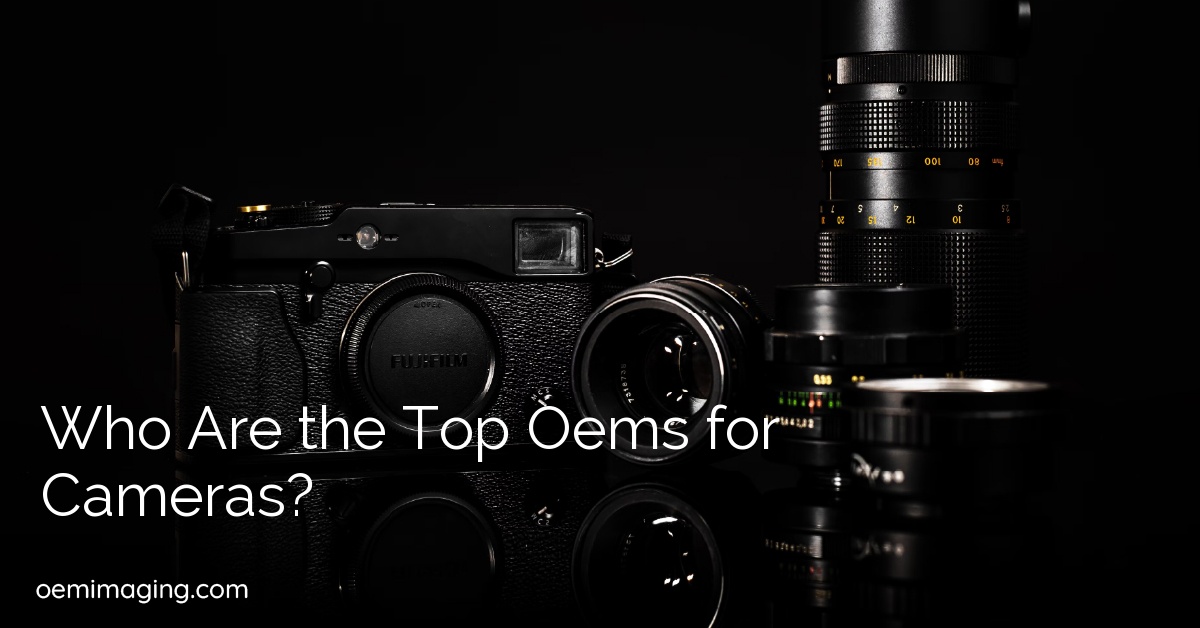
In order to figure this out, you first have to ask yourself, “Who are the manufacturers?” This is very easy to figure out. The most popular manufacturer of a digital camera would be Sony. They make a whole range of digital cameras – most notably the mirror-less E-mount model – which each come with their own unique selling point. In fact, Sony is so popular among digital photographers that, when you talk about who are the top oems for digital cameras, they’re always the first ones that are brought up.

Who are the top oems for cameras? Next, you should find out who are the top oems for digital cameras that were released in recent years. It’s been a while since cameras from Sony and other manufacturers have been releasing new models with some significant new features. After all, it’s been several years since cameras from other companies have been offering some of the same features – and there are still a lot of people who are not using those features to their advantage. In this case, you might want to read on to find out who are the top oems for digital cameras.

{T who are the top oems for | top oems | top | oems | who are the top oems for cameras?) One of the top features that Sony introduced with the A-mount camera model was the sensor shade. This feature allows the user to see the image even without taking the viewfinder directly from the lens. Another top selling feature for Sony A-mount cameras has to do with size. Sony made available the Mini mode, which means that the camera can be used small – instead of having to use the full-sized mode. The Sony A-mount pictures look so small because they are taken in this mode, which makes them very attractive to mini-users.

{T who are the top oems for | top oems for cameras | who are the top oems for | top oems | who are the top oems for cameras?) So, as you can see, the question of “who are the top oems for cameras?” is not simple to answer. Different cameras offer different features, and some of the features that you might find desirable for one person may not be something that another person will find attractive. The important thing is that when you use these products, you enjoy the best quality and you get the most value for your money. And, of course, you should always keep in mind the individual factor of each individual photographer.

What Focus Mode Should I Use For Portraits?

What Focus Mode Should I Use For Portraits?

Portraits have always been one of the most difficult photographic subjects to capture. It’s difficult because you have to keep your mind on the subject as you move from one portrait position to another, all the while trying not to get the focus wrong. This is even harder when using a fast shutter speed. However, if you use your camera properly, you can capture beautiful portraits with great focus.

The first thing you need to do when taking portraits is to make sure that you are in manual focus. If you are not already doing so, try switching to manual focus while the camera is still on auto focus. This way, you get more control over where your focus goes. Keep in mind that the object you are focusing on will be in your focal point, not your camera’s sensor.

If you think that you have the portrait right, take some more shots. Keep on practicing until you have the entire scene under control. Then, take another shot. Repeat the process as many times as you need until you feel like you are ready to move on to something else. Keep practicing until you are confident you have it down.

Now that you have mastered the art of taking portraits with the right focus, what focus mode should I use? There are a lot of different ones out there, but I personally prefer portraits with the background in the center and the subject in the foreground. This allows the viewer to see the true beauty of the subject without having to focus on the center. When taking landscape shots, keep this in mind.

What Focus Mode Should I Use For Portraits?

Some other great choices are spot light and flash. Depending on the lighting conditions, these can be great tools to help you capture the perfect image. However, depending on the lens you are using, sometimes the light itself is not enough to illuminate your subject. In this case, you may want to bring out the fog. Or maybe you want to bring out the smoke from the forest. No matter what the lighting conditions are, bring them into the foreground by using the right focal point.

As for the next step, the camera settings. First off, make sure you set the focus to manual. You do not want to fiddle around with the focus when you are taking the portrait. It can throw everything off and ruin the picture. Plus, if you accidentally move the focus from manual to automatic while taking the portrait, you will need to redo the portrait entirely.

If you need more help with your focus, there are a couple of other important things to keep in mind. First off, you always want to make sure that the distance between your subject and the center of the picture is the same. This is because when you move your camera from one point to another, your subject might be in front of the camera and behind it at another moment. To remedy this problem, just make sure that your focal point is relatively close to the middle of the picture and then move your camera a bit to fill in any gaps.

So now that you know what focus mode should I use for portraits? Practice! Try different settings on your camera until you find the best one for your portraits. Also, keep in mind that you need to compose the portrait so that it actually shows something about your subject. This is true no matter what type of portrait you are taking, whether it’s a headshot or a portrait of a person with many different features.