
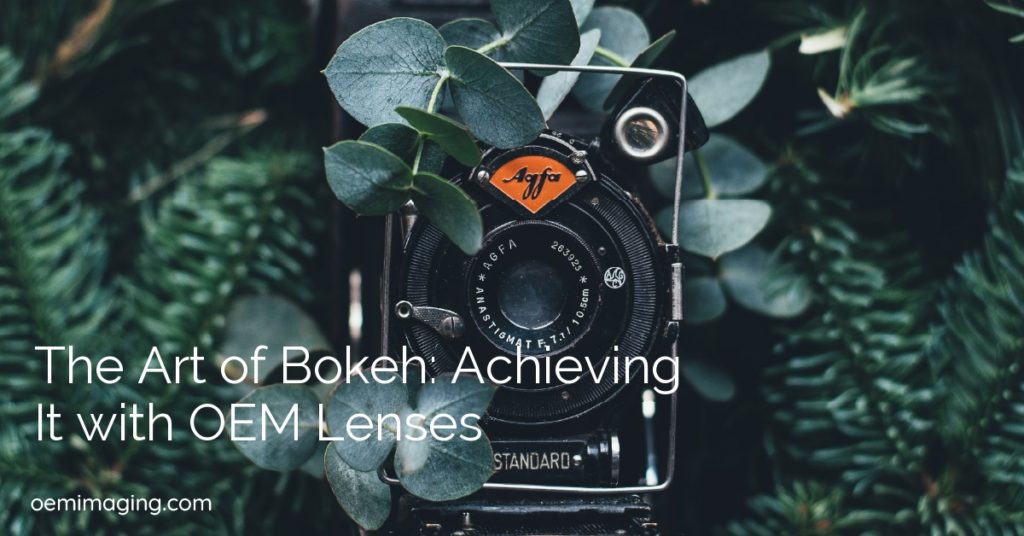
Bokeh is a term derived from the Japanese word “boke,” meaning blur or haze, and refers to the aesthetic quality of the out-of-focus areas in a photograph. Achieving stunning bokeh effects can greatly enhance the visual impact of your images. In this article, we will explore how to achieve beautiful bokeh using OEM lenses, which are the original equipment manufacturer lenses that come with your camera. We will discuss the unique characteristics of OEM lenses and the techniques you can use to capture impressive bokeh in your photos.
The Unique Look of Bokeh Factory – Palecwnosie Lenses
If you’re looking for a lens that can add a distinct vintage touch to your photography, the Bokeh Factory – Palecwnosie lenses are worth considering. These lenses are the result of a creative endeavor by an individual based in Poland who modifies old lenses to fit modern cameras. What sets these lenses apart is their unique look, which cannot be replicated by modern glass.
When using Palecwnosie lenses, you can expect certain “flaws” in their design, such as sharpness or coating issues, that contribute to their distinctive character. While they may not deliver the same level of sharpness as modern lenses, they offer a nostalgic analog feel that is increasingly sought after in today’s digital photography world.
It’s important to note that using Palecwnosie lenses may require some additional skills. These lenses are typically manual focus, which means you’ll need to have a good understanding of focusing techniques to achieve desired results. However, when used as an additional tool in your photography workflow, Palecwnosie lenses can provide incredible and rewarding results, allowing you to create images with a unique vintage aesthetic.
| Lens Characteristics | Description |
|---|---|
| Distinct Vintage Look | The lenses have a distinct vintage look that adds character and nostalgia to your photos. |
| Manual Focus | Palecwnosie lenses are typically manual focus, requiring additional skill and precision. |
| Unique Bokeh | These lenses produce unique bokeh with a soft and dreamy quality, adding depth to your images. |
| Analog Feel | These lenses offer an analog feel that is often sought after in today’s digital photography world. |
Whether you’re a professional photographer looking to add a vintage touch to your portfolio or an enthusiast who enjoys experimenting with different lens characteristics, the Bokeh Factory – Palecwnosie lenses can offer a unique and rewarding experience. Embrace the imperfections, explore the vintage aesthetic, and unleash your creativity with these distinctive lenses.
Pros and Cons of Using OEM Lenses for Bokeh Effects
When it comes to achieving stunning bokeh effects, using OEM lenses can offer a range of advantages. These original equipment manufacturer lenses are specifically designed to work seamlessly with your camera, providing you with a reliable and efficient tool for capturing beautiful images. However, it is important to consider both the pros and cons before deciding to use OEM lenses for bokeh effects.
Pros of Using OEM Lenses
- Wide range of options: OEM lenses come in various focal lengths and apertures, giving you the flexibility to achieve different looks and styles of bokeh.
- Sample galleries: The Bokeh Factory, a trusted source for OEM lenses, provides sample galleries for each lens, allowing you to see the specific qualities and characteristics before making a purchase.
- Positive customer reviews: The customer service and delivery from the Bokeh Factory have received positive feedback from photographers, ensuring a smooth and satisfactory experience.
Cons of Using OEM Lenses
- Manual focus: Many OEM lenses require manual focusing, which can be challenging, especially when dealing with fast-moving subjects or in low-light situations. This may require additional skill and practice to achieve precise focus.
- Image sharpness: Compared to newer lenses, OEM lenses may not have the same level of sharpness and clarity. This can result in slightly softer images, which may or may not be desirable depending on your artistic vision.
- Limited availability: Depending on the specific OEM lens you are interested in, availability may be limited. Some lenses may be harder to find or require pre-ordering, leading to potential delays in obtaining the lens.
By considering the pros and cons of using OEM lenses for bokeh effects, you can make an informed decision about whether they are the right choice for your photography needs. While OEM lenses offer a wide range of options and reliable performance, they do come with certain limitations that should be taken into account. Ultimately, it is up to you to weigh these factors and determine the best lens for achieving the bokeh effects you desire.
| Pros of Using OEM Lenses | Cons of Using OEM Lenses |
|---|---|
| Wide range of options | Manual focus |
| Sample galleries for lens previews | Image sharpness |
| Positive customer reviews | Limited availability |
Options for Precise Manual Focusing with OEM Lenses
When using OEM lenses for capturing bokeh effects, achieving precise manual focus is essential. Different camera systems offer various options to aid in achieving perfect focus. Let’s explore some of these options:
1. Live View with Zoom
Nikon and Canon cameras, among others, provide Live View with zoom functionality, which can be helpful for achieving precise manual focus. By using Live View, you can magnify the image on the screen, allowing you to focus on the specific details with greater accuracy. However, it’s important to note that this method may be slower and less effective in bright light conditions.
2. Focus Peaking
Mirrorless cameras offer a feature called focus peaking, which highlights the in-focus areas on the viewfinder or LCD screen. This visual aid helps you determine where the sharpest focus lies, making manual focusing much faster and more efficient. Focus peaking is particularly useful when using OEM lenses, as they often require manual focus. By utilizing focus peaking, you can achieve precise focus and capture stunning bokeh effects.
3. External Monitor
Another option for achieving precise manual focus with OEM lenses is to use an external monitor. External monitors, such as the Feelworld FW-760, provide a larger screen and additional features like focus peaking and exposure zebra stripes. With a larger, more detailed display, you can easily assess the focus accuracy and make adjustments as necessary. This option is especially beneficial for photographers who require maximum precision in their manual focusing process.
By utilizing these options, you can enhance your ability to achieve perfect focus when using OEM lenses, resulting in stunning bokeh effects in your photographs.
| Option | Camera Systems | Advantages |
|---|---|---|
| Live View with Zoom | Nikon, Canon, and others | Allows for magnifying the image for precise focus |
| Focus Peaking | Mirrorless cameras | Highlights in-focus areas for faster and more efficient manual focusing |
| External Monitor | N/A | Provides a larger screen and additional features for maximum precision in manual focusing |
Understanding the Meaning of Bokeh and Its Characteristics
Bokeh, derived from the Japanese word “boke,” refers to the aesthetic quality of out-of-focus areas in a photograph. It is the soft, pleasing blur that can be seen in the background or foreground of a subject. Bokeh adds depth and visual interest to a photo, making it a popular technique among photographers.
To achieve bokeh effects, it is important to use a lens with a wide aperture, such as f/2.8 or wider. The size and shape of the out-of-focus blur orbs, known as bokeh balls, are determined by the diaphragm blades of the lens. Lenses with circular blades create round, soft orbs, while lenses with more angular blades produce shaped bokeh.
When it comes to bokeh, the aperture plays a crucial role. A larger aperture, like f/1.8 or f/1.4, will result in a more blurred background and increased bokeh. However, even with smaller apertures like f/8, bokeh can still be achieved by increasing the distance between the subject and the background.
| Characteristics of Bokeh | Description |
|---|---|
| Softness | Bokeh should have a soft, gentle appearance, creating a smooth transition between the focused and out-of-focus areas. |
| Smoothness | The bokeh orbs should appear smooth and free from any noticeable harsh edges or artifacts. |
| Shape | The shape of bokeh orbs can vary depending on the lens. Circular blades create round orbs, while angular blades produce shaped bokeh. |
| Background Interaction | Bokeh should interact harmoniously with the background, complementing the overall composition of the image. |
| Subject Separation | Bokeh helps to separate the subject from the background, drawing attention to the main focal point of the photograph. |
Understanding the characteristics of bokeh can help photographers create images with pleasing and captivating out-of-focus areas. Experimenting with different lenses and apertures can lead to unique and stunning bokeh effects that enhance the overall visual impact of your photographs.
Best Aperture and Lens for Bokeh Effects
To achieve stunning bokeh effects in your photographs, selecting the right aperture and lens is crucial. A wide aperture lens, such as f/2.8 or wider, is ideal for capturing beautiful bokeh. Prime lenses are often favored for their ability to produce visible bokeh orbs in photos. By using a larger aperture, you can achieve a more blurred background and increased bokeh in your images. However, even with smaller apertures like f/8, bokeh can still be achieved by adjusting the distance between the subject and the background.
When it comes to lens selection, it’s important to consider the specific characteristics of each lens. Different lenses can produce different bokeh effects, depending on the number and shape of their diaphragm blades. Lenses with circular blades tend to create round and soft bokeh orbs, while those with more angular blades can produce shaped bokeh. Experimenting with various lenses can help you find the ideal bokeh look for your photography style.
Comparison Table: Best Aperture and Lens for Bokeh Effects
| Lens Model | Maximum Aperture | Bokeh Characteristics |
|---|---|---|
| Nikon 50mm f/1.8 | f/1.8 | Round and soft bokeh orbs |
| Canon 85mm f/1.4 | f/1.4 | Round and creamy bokeh orbs |
| Sony 35mm f/1.4 | f/1.4 | Round and smooth bokeh orbs |
| Fujifilm 56mm f/1.2 | f/1.2 | Round and dreamy bokeh orbs |
| Pentax 77mm f/1.8 | f/1.8 | Round and soft bokeh orbs |
It’s important to note that the specific bokeh characteristics can vary slightly between lens models, even within the same maximum aperture range. Therefore, it’s recommended to test different lenses to find the perfect combination of lens and aperture that produces the desired bokeh effect for your photography.
Tips for Achieving Bokeh in Your Photos
Creating beautiful bokeh in your photos can add a stunning visual impact to your images. Here are some tips and techniques to help you achieve the desired bokeh effect:
1. Shoot with a wide aperture: Use the widest aperture available on your lens, such as f/2.8 or wider. This creates a shallow depth of field, blurring the background and enhancing the bokeh.
2. Increase the distance between subject and background: By increasing the distance between your subject and the background, you can create a more blurred background, emphasizing the bokeh effect.
3. Use backlight or side light: Employing backlight or side light can create stunning bokeh by highlighting the background. This technique adds depth and visual interest to your photos.
4. Explore close-up portraits and macro photography: Close-up portraits and macro shots are perfect for showcasing bokeh. The shallow depth of field and focus on small details can result in beautiful, dreamy bokeh effects.
Remember to experiment and have fun with these techniques. Bokeh photography allows you to unleash your creativity and capture visually striking images. So go out, explore different shooting conditions, and watch your bokeh-enhanced photos come to life!

Leah Thorpe is the founder and chief editor of OEM Imaging, a blog dedicated to simplifying complex topics related to Original Equipment Manufacturer (OEM) imaging for a broad audience. With a passion for making technical information accessible, Leah and her team provide readers with insightful and easy-to-understand content on various aspects of OEM imaging, from product photography tips to understanding the differences between OEM and aftermarket products.